
Quebec Gaming Coalition Aims to Bring Order to Gaming Market
Despite Loto-Québec's recent agreement to add Incentive Games' real money and free-to-play content to its platform—a further boost to the platform—those advocating for a competitive igaming market in Quebec akin to Ontario are still making their voices heard.
The Quebec Online Gaming Coalition submitted its brief to the Ministry of Finance the day following the Super Bowl, a major sports betting event in the province.
In order to work with the Quebec government and local stakeholders to create a new regulatory framework for the province that would compete with government-owned Loto Québec, Betway, Bet99, DraftKings, Entain, Flutter, Games Global, Rush Street Interactive, and Apricot Investments formed the Quebec Online Gaming Coalition in May 2023.
The sole permitted online betting site in the province is the Crown Corporation.
Coalition: It's Time for a Market Revolution
The Coalition claims that the primary problem is the requirement to control the over 2,000 grey market websites that provide Quebec players with sports betting, casino, and poker games of differing quality and minimal or nonexistent responsible gambling protections.
The Coalition claims that in addition to needlessly endangering vulnerable individuals, the Quebec government is losing out on nearly $300 million in tax income annually. Quebec is missing out on online gaming by concentrating only on "physical" or land-based gaming options like bingo nights, video lottery terminals, and Loto-Québec's Salon de jeux.
Ariane M. Gauthier, a representative for the Quebec Online gambling Coalition, stated, "Why restrict the regulation of online gaming to Loto-Québec sites alone, when the offering available on the Internet is much broader?"
“Quebec could very well apply the same rules to private online gaming platforms, whether for advertising, age verification, or accountability, for example. This would channel the vast majority of online gaming into a stable and regulated environment, which is desirable for everyone.”
The Market Model of Ontario
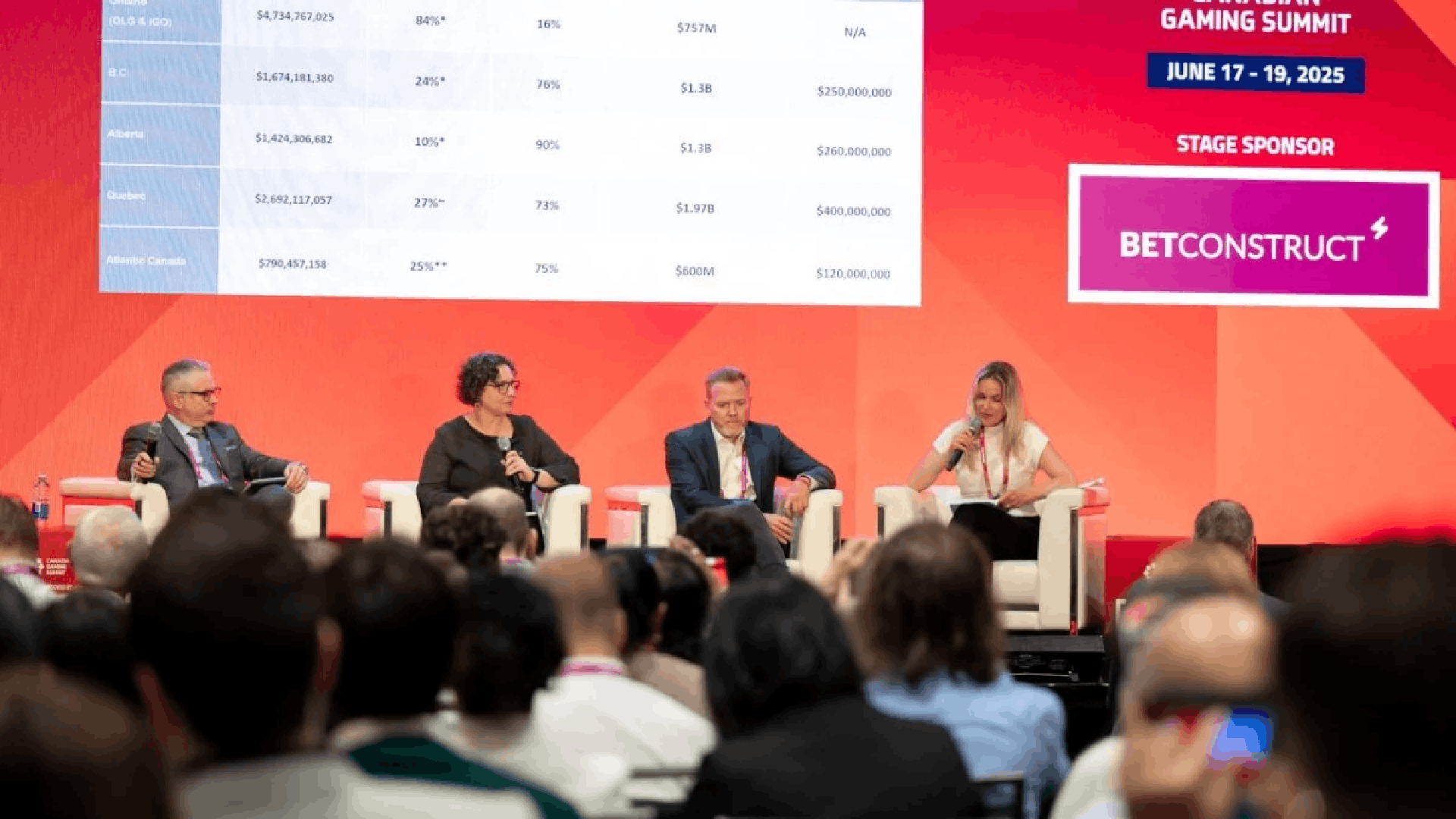
A presentation by TRM Public Affairs at last summer’s Canadian Gaming Summit in Toronto put a number on what Quebec is missing out on – the province leads the charge in the lost gross gaming revenue department, at CAD $1.97 billion,followed by Alberta and B.C., at CAD $1.3 billion, Ontario, at CAD $757 million, and Atlantic Canada, at CAD $600 million.
The Coalition made four recommendations to the provincial government based on feedback from public health experts and an analysis of the experience in Ontario, a market that will soon celebrate its fourth anniversary with 48 licensed operators and slightly over $4 billion in non-adjusted gross gaming revenue in 2025.
In Ontario, the government receives 20% of the money earned by private operators as taxes.
Canadian Gaming: Coalition Recommendations
- Put an independent regulator in charge of overseeing all online gaming operators, public or private.
- Work with stakeholders to create Quebec-only government standards for regulating private and public online gaming.
- Lay out the rules for getting an operating license and agree to share revenue with the Quebec government.
- Use part of private online gaming profits to help communities and ramp up prevention funding.
Gauthier’s group also referenced the Alberta private igaming market model, which is expected to go live this spring or summer. In such case, the new Alberta iGaming Corporation will complete commercial agreements with the operators after Alberta Gaming, Liquor & Cannabis (AGLC) handles registration.
A $50,000 one-time application fee and a $150,000 annual registration charge are required for an iGaming Operator license.